
Baby Playtime Buying Guide
0-6 Months
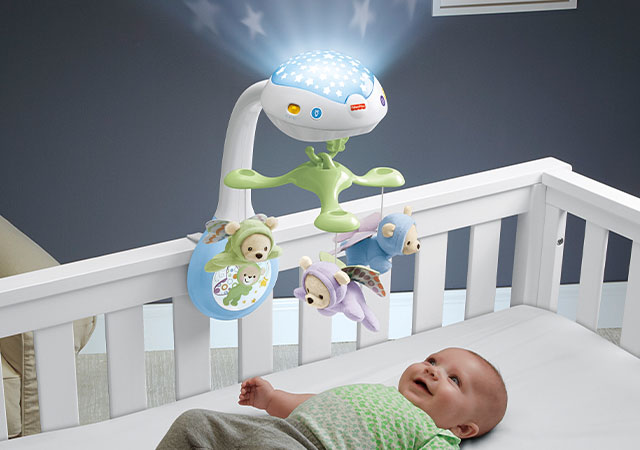
Sensory Toys
From birth, your baby's ability to interact with sights, sounds and textures is beginning to grow. As your little one's sight and hearing develop, they'll be fascinated by baby sensory toys with bright colours, fun shapes, lights and sounds. At bedtime, night lights and cot mobiles can encourage eye-tracking.
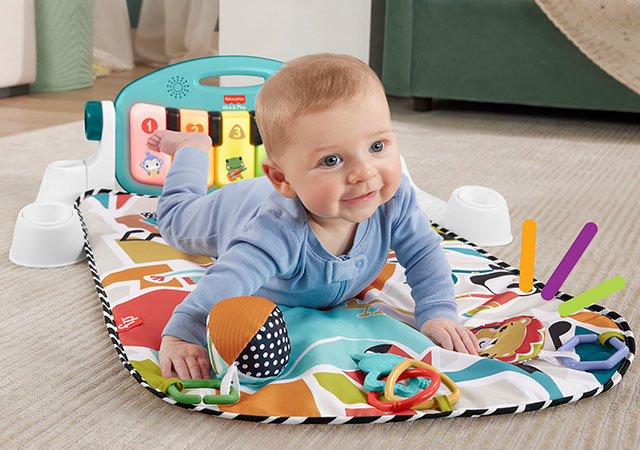
Playmats, Gyms & Tummy Time
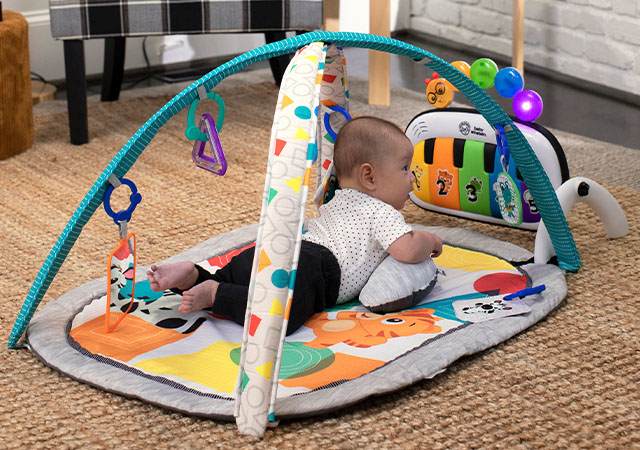
Baby playmats and playgyms give little ones a comfy spot to lie on their stomach for tummy time, practising little workouts like raising their head and rolling over. Playmats with prop pillows can help create a comfier tummy time, while toys on all sides encourage your baby to reach and stretch.
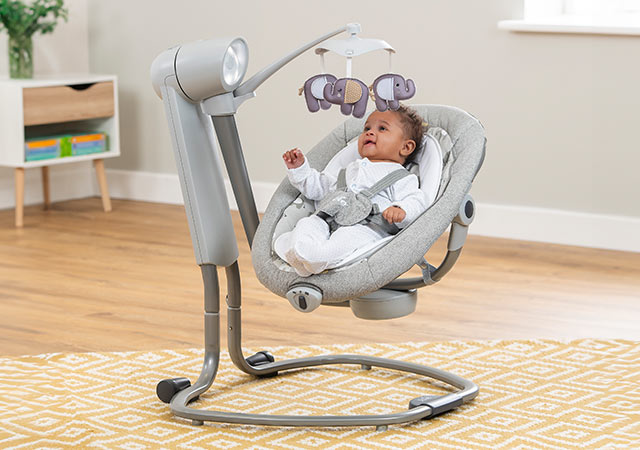
Baby Bouncers & Swings
Bouncers, rockers and swings feature supportive seats and gentle motions to calm a crying baby. Baby bouncers or swings with soothing music or toy bars can help keep your baby entertained while you can have a moment with your hands free.
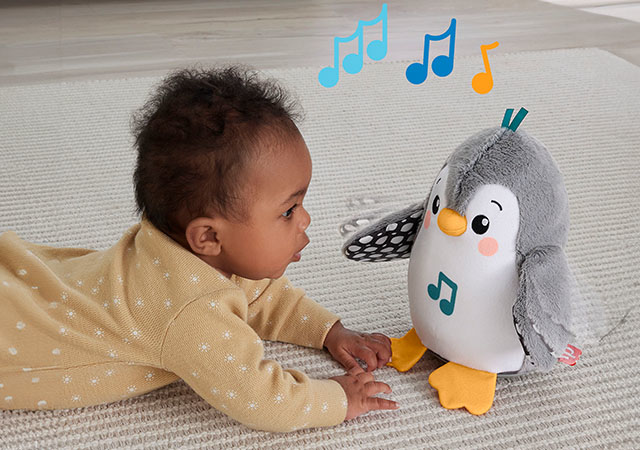
Baby Toys
Baby toys can help keep little ones active and entertained. Use baby toys to spark your child’s curiosity during tummy time and as they learn to crawl.
6-12 Months
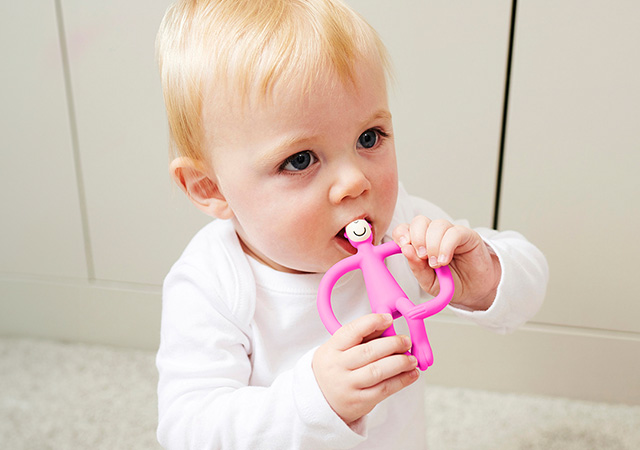
Teethers
Chewing a teether can help to soothe baby’s gums as their first teeth begin to push up. Playtime is a great way to take your baby’s mind off any discomfort.
First teeth: Teething usually begins around 6 months, but can happen anytime between 3 and 12 months.
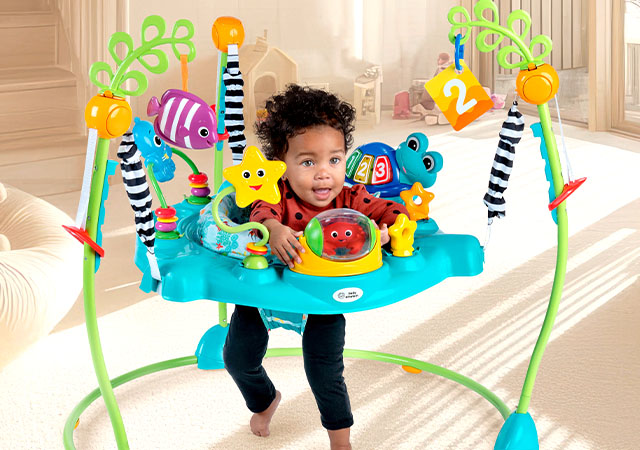
Baby Jumpers & Entertainers
Baby jumpers and entertainers are stationary activity centres where little ones can jump, swivel and play with toys and activities on all sides. Baby jumperoos with music, lights and take-along toys can help to engage your little one, encouraging them to use their motor skills as they jump, reach and grasp.
Learning to Stand: Great for bouncing and getting them moving, a baby entertainer or jumperoo can also help baby get used to being on their feet.
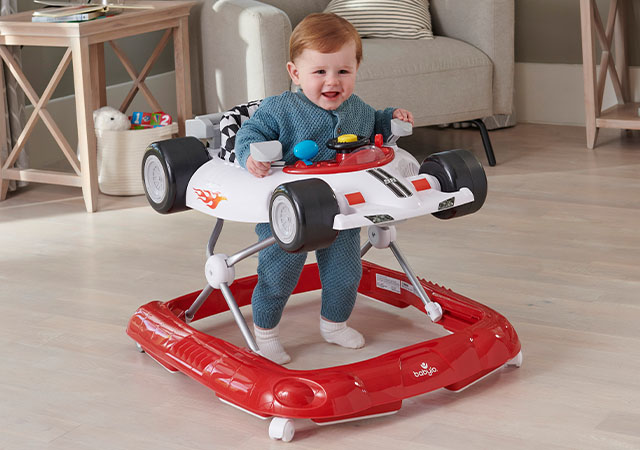
Baby Walkers
Baby walkers give kids who can’t yet walk unaided a new way to get around, kicking at the floor to scoot along. Walkers with lights, sounds, rattles or bead chasers can help to spark baby’s curiosity.
Remember - Because babies in walkers are on the move, you’ll have to keep a careful watch as they play.
Ready for First Steps:A baby walker can be used from when babies can sit up unaided until they start to walk.
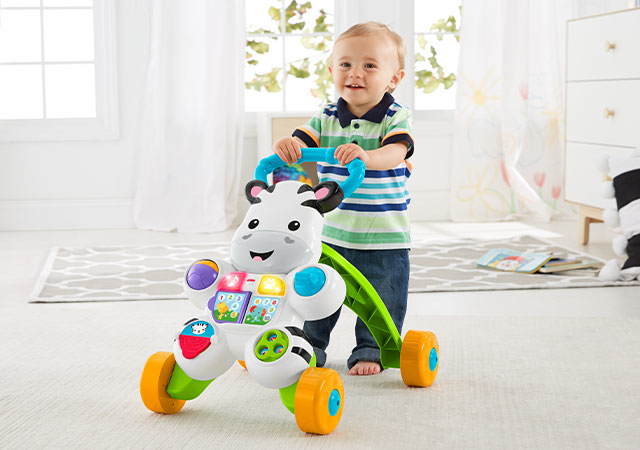
Push Along Walkers
Once your baby is more balanced on their feet, a push along walker gives them the support they need to walk a little further. Push along walkers are great for building baby’s confidence once they’ve taken their first steps.
Beginning to Walk: On average, a baby can take their first steps between 9 and 12 months, beginning to walk around 3 months later.
Activity & Developmental Toys
Activity toys give your baby engaging ways to play, like sorting shapes, stacking blocks and exploring role play. These developmental toys can help babies learn to use their problem-solving and fine motor skills, as well as introducing colours, animals, first words, music and more.
First Words: Most children speak their first word between 10 and 14 months. Talking to babies about all the shapes, animals and colours they see in their toys can help encourage word recognition.
Safety
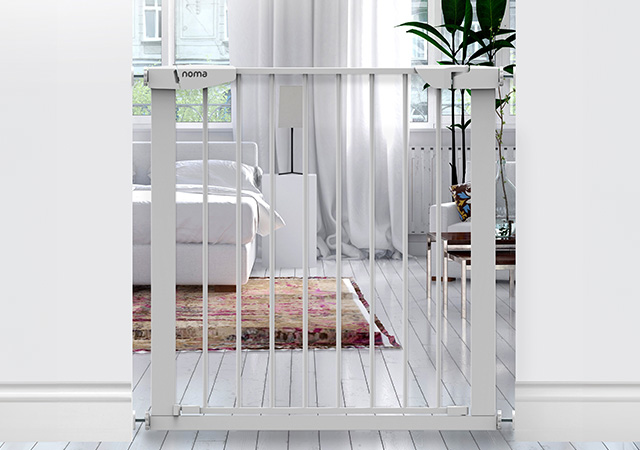
Once your baby is on the move, they’re sure to come across the stairs and other household hazards. That‘s why baby proofing with stair gates and fireguards is so important.