
Which baby monitor is right for me?
It all depends on the features you want from a baby monitor. A classic audio monitor lets you hear if baby calls out, while video monitors with cameras can make it easier to tell whether baby is really stirring. There are lots of smart features available too – baby monitors with camera zoom, tilt and pan give you more control, while 2-way talk back lets you speak to your little one through the monitor, so you can hear baby and baby can hear you.
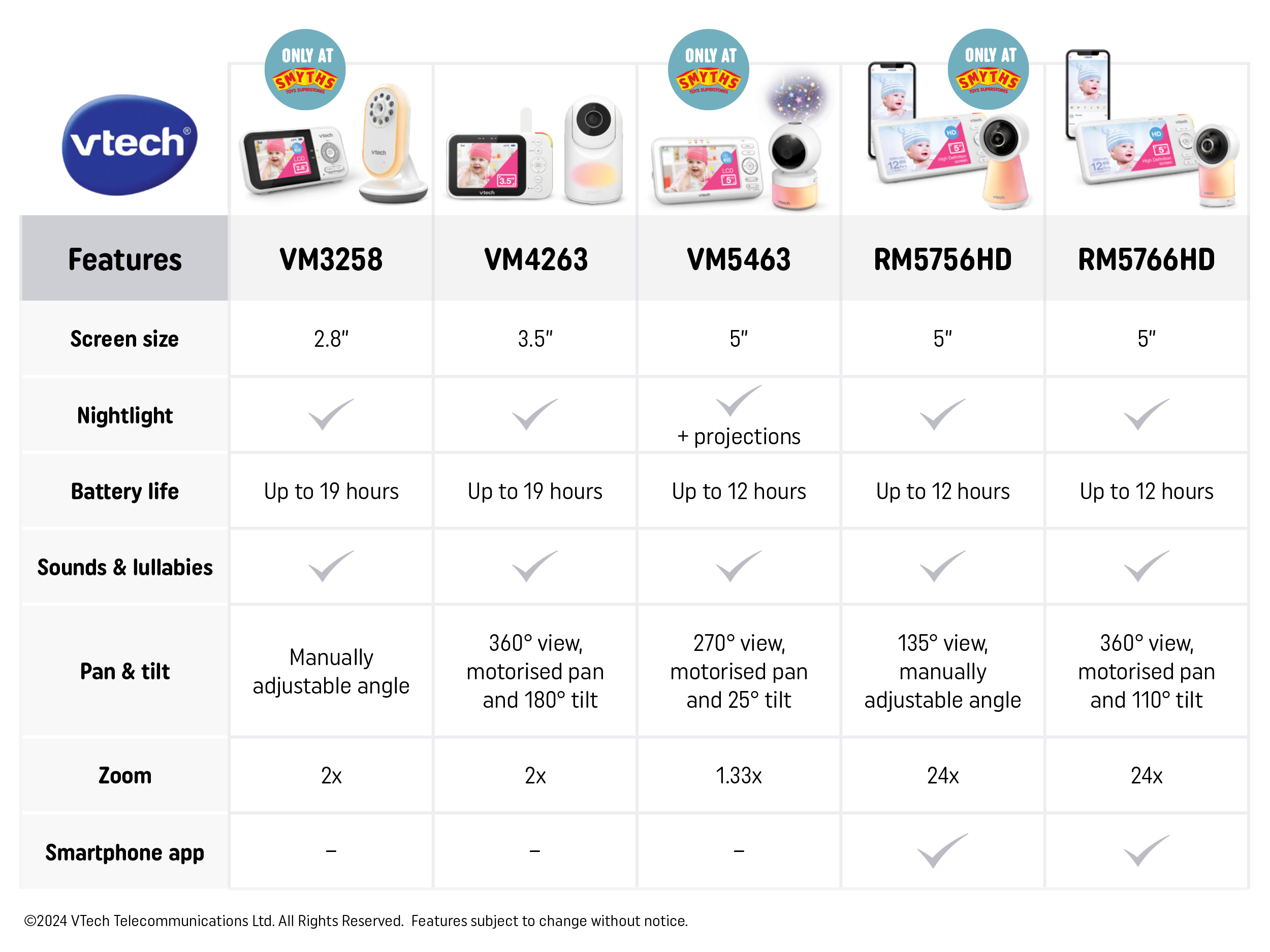
We've put together this table to help you choose a baby monitor with the features that matter to you.
Using a baby monitor safely
Once you’ve found the monitor that’s just right, please follow all of the manufacturer’s safety warnings. We have a few quick tips too:
Install and test your baby monitor before baby comes home.
Hide power cord. Keep any cords at least 3 feet away from baby’s cot and out of baby's reach.
Do not keep the monitor on or in the crib. While you may want to have your monitor as close to baby as possible, it’s safer to keep the monitor a few feet away from little hands.
Movement monitors are not SIDS safeguards. While movement monitors can detect baby's breathing patterns, it's important to note that they are not recommended to prevent SIDS.
A monitor does not replace adult supervision.